
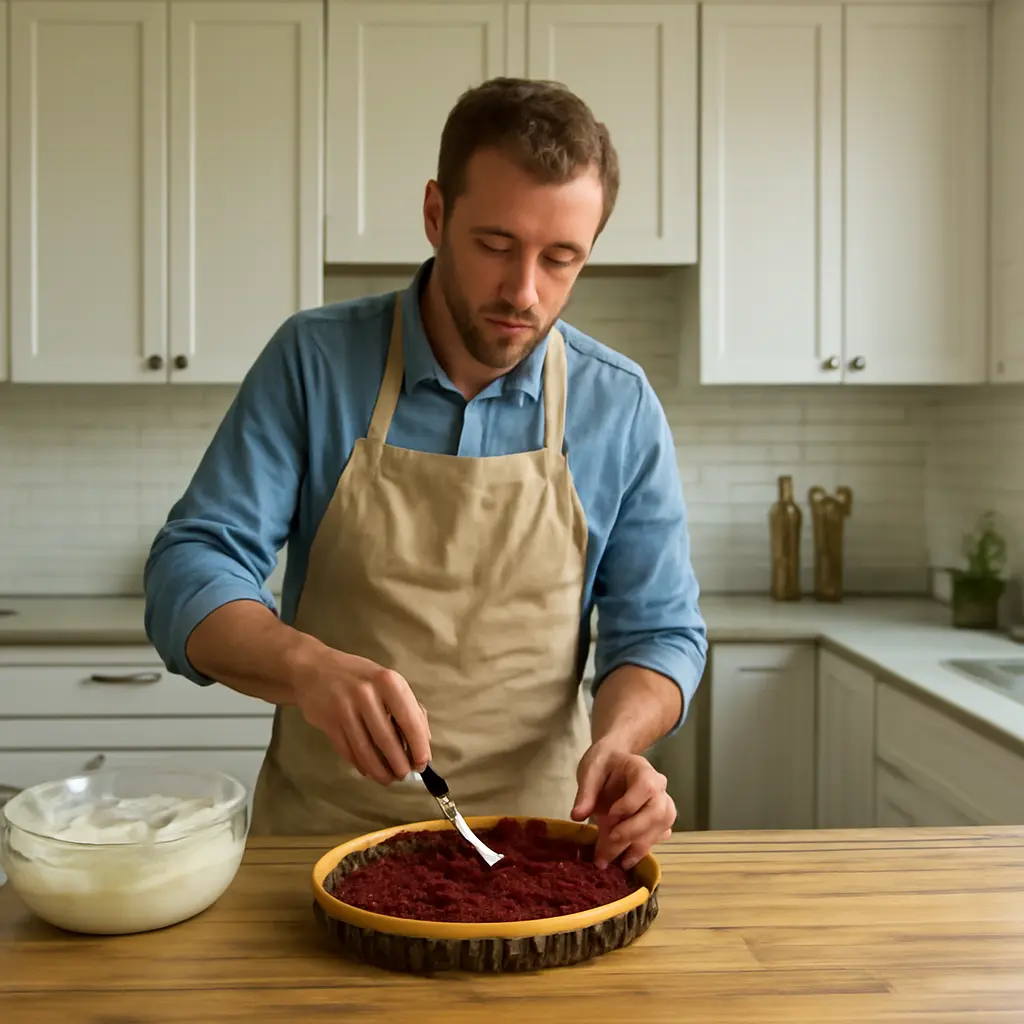
Sauce-base layering is the practice of spreading a concentrated, flavor-rich mixture beneath cream or another mild topping so the two remain distinct while baking. In pies, tarts, and other pastries, that thin foundation can add fruit acidity, toasted-nut depth, spice, or chocolate intensity that cream alone may soften. The technique is useful because cream’s fat and moisture can mute sharp flavors and make a delicate crust soggy; a thin, compatible base adds contrast and can help manage moisture. Below, we’ll look at what counts as a sauce base, how to choose and prepare one, how to layer it safely, and where the approach works best.
Sauce-base layering builds flavor beneath cream
A sauce base is a concentrated, spreadable layer placed between pastry and cream, or between a baked shell and a cream filling. It is not one standardized culinary term with a single technical definition. In practice, it may be a reduced fruit purée, jam, ganache, nut praline, caramel, or a thick spiced sauce. The defining feature is its position and purpose: it provides a flavorful foundation rather than serving as the main filling.
The idea draws on two well-established kitchen principles. First, flavor is easier to perceive when a dish balances contrasting tastes and textures; the Institute of Food Technologists describes flavor as a combined sensory experience involving taste, aroma, and other perceptions. Second, pastry structure depends on controlling moisture. King Arthur Baking’s guidance on preventing soggy pie crusts emphasizes techniques such as baking the crust thoroughly and using barriers where appropriate. A thin, properly prepared base can contribute flavor and, in some recipes, help separate a wet cream layer from pastry.
There is no reliable universal statistic showing how many home bakers skip this step. Its value is better judged by the recipe: cream is mild and rich, while a small amount of concentrated sauce can supply the contrast the dessert needs. Think of a chart with three layers—crisp pastry, intense sauce, and cool cream—as a simple way to visualize the intended balance.
Fruit reductions and preserves
A fruit reduction is fruit purée or juice simmered until some water evaporates, concentrating its flavor and making it thick enough to spread. A strained preserve or jam can serve a similar role. Berry reduction beneath vanilla cream, for example, contributes acidity and aroma that offset dairy richness. Cool the mixture before assembly; warm sauce can soften cream or cause it to separate.
Ganache, caramel, and nut-based layers
Ganache combines chocolate and cream into a smooth mixture that firms as it cools. Caramel offers toasted sweetness, while praline paste or finely ground roasted nuts can contribute a deeper, lightly bitter note. These are richer bases than fruit, so use a thin layer beneath lightly sweetened cream to avoid making the dessert cloying. For a crisp tart shell, a firm chocolate layer can also act as a moisture barrier, though it should not be treated as a substitute for proper baking and cooling.
Sauce-base selection balances flavor and texture
The best base is thick enough to stay in place, flavorful enough to register in a small quantity, and compatible with the cream and pastry. Consider sweetness, acidity, fat, and water content together. A sharp fruit sauce can brighten sweetened cream; a nut or chocolate base may pair better with unsweetened or lightly sweetened cream. The base should complement the topping rather than compete with it.
Match intensity to the cream
Cream carries aroma and flavor compounds through its fat, but its mildness can make it seem less vivid beside a concentrated sauce. Choose a base with a clear flavor: tart raspberry with vanilla cream, espresso caramel with chocolate cream, or lemon curd beneath lightly sweetened whipped cream. Taste the base and cream separately, then together. If the combination seems too sweet or heavy, add acidity, reduce the base quantity, or use less sugar in the cream.
Control moisture to protect pastry
A sauce that is too loose can migrate into a crust and make it soft. Simmer fruit mixtures until they leave a brief trail when a spatula is drawn across the pan, or thicken them according to a tested recipe. Allow the base and baked shell to cool fully before adding cream. The U.S. Department of Agriculture advises keeping perishable foods, including dairy-based desserts, under refrigeration; assemble cream-filled pastries promptly and refrigerate them rather than leaving them at room temperature for extended periods.
Sauce-base layering works best with deliberate assembly
Layer order affects both the eating experience and the pastry’s texture. In a baked tart shell, spread a restrained amount of cooled base over the cooled crust, then add the cream. In a dessert assembled in glasses, place the sauce beneath the cream for a clear visual band, or spoon a little over the cream if the sauce is intended as a finish. Follow the recipe’s instructions when the base must be baked with the pastry or set before topping.
Use a thin, even layer
A thin layer gives each bite a distinct flavor without overwhelming the cream. Spread it evenly, leaving a small margin if the cream will be piped to the edge. For a standard tart, begin with just enough to coat the surface; the exact quantity depends on the shell’s diameter and the sauce’s thickness. A spoon or small offset spatula helps distribute the base without tearing delicate pastry.
Cool, set, and store with care
Let cooked sauce cool before layering, and give a fluid base time to thicken. If the cream is whipped, add it only after the pastry and base are cool; heat can melt the fat structure that holds whipped cream’s volume. Store the completed dessert covered in the refrigerator and follow the recipe’s storage guidance. For the crispest result, many pastry components can be prepared ahead and assembled closer to serving time.
Examples show how a base changes a dessert
A berry tart with pastry cream illustrates the technique clearly: a thin raspberry reduction supplies tartness, while the cream provides a soft, mellow layer. A chocolate tart can use a narrow strip of salted caramel beneath whipped cream to add a toasted, savory-sweet note. In a lemon dessert, a small amount of fruit preserve beneath cream can reinforce the fruit flavor without requiring a thicker filling. These are practical applications of flavor contrast, not claims that a particular layering method has been proven superior in controlled trials.
The method also helps adapt a familiar recipe. If a cream tart tastes flat, add a small amount of a complementary concentrated base rather than increasing the sugar throughout. If it tastes too rich, try a sharper fruit layer. Make one change at a time so you can identify whether the difference comes from flavor, sweetness, or moisture.
Conclusion: a small layer can make cream desserts more complete
Sauce-base layering gives cream desserts a deliberate foundation of flavor and, when the base is thick and well cooled, can help manage contact between moist fillings and pastry. Fruit reductions and preserves bring acidity; ganache, caramel, and praline add darker, richer notes. Select a base that balances the cream, keep the layer thin, and assemble only after components have cooled. Try the technique in a tart or layered dessert, then adjust the sauce and cream to suit your taste. For additional guidance, consult tested pastry recipes and food-safety advice from King Arthur Baking and the USDA.
Sources: Institute of Food Technologists, “Sensory Evaluation,” https://www.ift.org/; King Arthur Baking, “How to Prevent Soggy Pie Crust,” https://www.kingarthurbaking.com/blog/2018/05/14/how-to-prevent-soggy-pie-crust; U.S. Department of Agriculture, Food Safety and Inspection Service, “Keep Food Safe! Food Safety Basics,” https://www.fsis.usda.gov/food-safety/safe-food-handling-and-preparation/food-safety-basics/keep-food-safe-food-safety-basics