
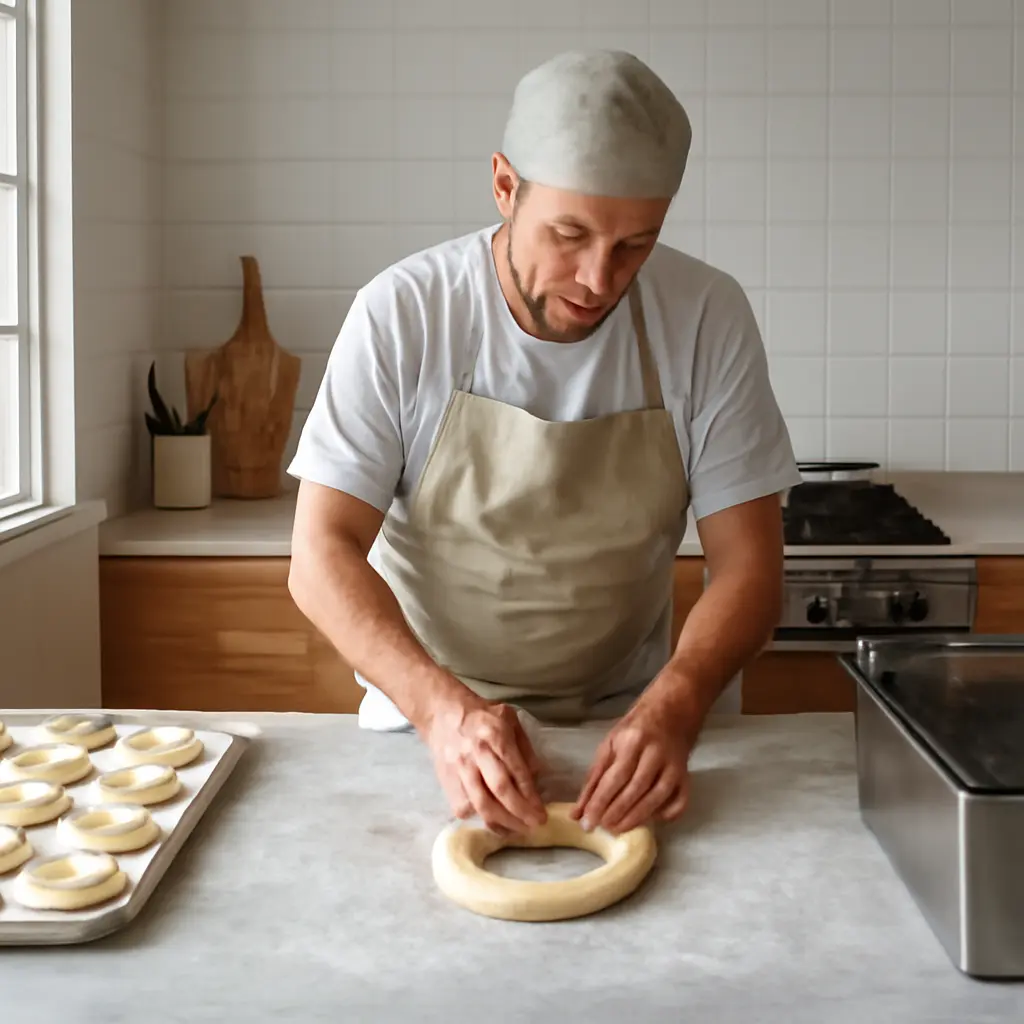
Cake donuts and yeast donuts are two familiar styles of fried dough, but they differ in what makes them rise—and that changes their texture, flavor, and preparation. Cake donuts are leavened with baking powder or baking soda, while yeast donuts rely on fermentation by baker’s yeast. The result is usually a tender, close-crumbed cake donut versus a lighter, more elastic yeast donut. Understanding the distinction makes it easier to choose a style, follow a recipe, or troubleshoot a batch; food-science guidance from King Arthur Baking and the Institute of Food Technologists helps explain why the differences occur.
Leavening Defines the Difference Between Cake Donuts and Yeast Donuts
Leavening is the process that puts gas into dough or batter so it expands during cooking. In a cake donut, chemical leaveners release carbon dioxide when they react with moisture, acidity, or heat. In a yeast donut, baker’s yeast ferments sugars, producing carbon dioxide that inflates the dough over time. King Arthur Baking’s baking guidance describes yeast as a living leavener whose fermentation also develops flavor, while chemical leaveners act through a faster acid-and-base reaction.
These are the two main donut families, with variations inside each: cake donuts may be made from a soft batter or a firmer dough, and yeast donuts include ring-shaped donuts as well as filled styles such as jelly or custard donuts. Their characteristic textures are useful clues, but recipes, frying conditions, and toppings can blur the distinction. The first practical difference is what happens before the donuts reach the fryer.
Cake Donuts Use Chemical Leavening
A cake donut is a quick-bread-style donut raised primarily with baking powder or baking soda rather than yeast. Baking powder contains both an alkaline ingredient and one or more acids; when moistened and heated, it produces carbon dioxide. Baking soda needs an acidic ingredient in the recipe to react effectively. The gas expands the batter or dough, giving the cooked donut its characteristic cakey crumb.
Cake donut mixtures are generally mixed and cooked without the lengthy proofing required for yeast dough. They may be portioned from thick batter or rolled and cut from a firmer dough, depending on the recipe. The Institute of Food Technologists explains that ingredients and processing influence a food’s structure and texture; in donuts, the ratio of liquid to flour and the amount of mixing are among the factors that determine whether the crumb is tender, dense, or tough.
Yeast Donuts Rise Through Fermentation
A yeast donut is made from dough leavened by baker’s yeast, usually Saccharomyces cerevisiae. Yeast consumes available sugars and releases carbon dioxide and flavor compounds. The dough is allowed to rise, shaped, and often proofed again before frying. These resting periods give the dough time to expand and develop its familiar soft, airy structure.
Fermentation depends on conditions such as time, temperature, and dough composition. Too little proofing can leave a donut tight and heavy; too much can weaken the dough and make handling difficult. Unlike the quick chemical reaction in a cake donut, yeast leavening is biological and time-dependent, which is why yeast recipes include rising instructions.
Texture and Flavor Distinguish Cake Donuts from Yeast Donuts
The leavening method shapes the donut’s interior, but it is not the only influence: flour, sugar, fat, mixing, proofing, and frying all matter. In general, cake donuts have a more compact, crumbly bite, while yeast donuts are lighter and more stretchy. The distinction is easiest to notice in a plain, freshly fried donut, before a thick glaze or filling dominates its flavor.
Cake Donuts Have a Tender, Cakey Crumb
Cake donuts typically break apart more readily than yeast donuts and may feel slightly crisp at the edges with a tender interior. Their flavor can be buttery, spiced, or reminiscent of a muffin or simple cake. A cinnamon-sugar cake donut, for example, tends to hold its shape and deliver a substantial bite rather than the pull-apart softness of a raised donut.
A cake donut can still be light if its recipe is well balanced and it is fried correctly. A heavy result may point to overmixing, inaccurate leavener measurement, or oil that is not at an appropriate temperature—not simply to the fact that it is a cake donut.
Yeast Donuts Are Usually Airier and More Elastic
Yeast donuts commonly have a fine, airy interior that compresses and springs back when gently pressed. Their dough structure lets the crumb stretch or pull apart, making them a natural fit for fillings and glazes. A classic glazed ring donut and a filled jelly donut are familiar examples of yeast-raised styles, though the precise recipe can vary by bakery.
Yeast fermentation can contribute subtle complexity, but it does not guarantee a pronounced “yeasty” taste. Proofing, frying, and toppings all affect the final flavor. As a result, a person may identify the airy texture more easily than the fermentation flavor itself.
Preparation and Frying Change How Each Donut Is Made
The practical difference between the styles becomes clear in the kitchen. Cake donuts are often faster to prepare because they do not need yeast proofing. Yeast donuts take longer, but their dough can be shaped into a wider range of rings and filled forms. Both styles need careful frying: the donut’s size, dough, and oil temperature affect browning, cooking, and oil absorption.
Cake Donuts Are Often the Quicker Option
Because chemical leaveners work without fermentation, many cake donut recipes can move from mixing to frying relatively quickly. Batter-style recipes may be piped or deposited into hot oil, while dough-style recipes are rolled and cut. This makes cake donuts a convenient choice when there is no time to wait for dough to rise.
Quick preparation does not mean that every cake donut is effortless. The mixture can be delicate, and overworking a dough-based recipe can produce a tougher texture. Following the recipe’s mixing and portioning instructions matters just as much as selecting the right leavener.
Yeast Donuts Require Rising and Proofing
Yeast donuts need time for fermentation and, in many recipes, a second rise after shaping. The baker must allow enough expansion without letting the dough overproof. This longer process helps create the open, soft crumb associated with raised donuts and makes yeast dough well suited to shaping, cutting, and filling.
For home bakers, the dough’s appearance and feel are more useful than relying on a fixed clock alone, since room temperature and yeast activity vary. A recipe’s proofing times provide a guide, but dough that is visibly puffy and properly expanded is a better sign that it is ready to fry.
Oil Temperature Matters for Both Styles
Frying temperature affects how quickly the outside browns and how thoroughly the center cooks. Oil that is too cool can leave donuts greasy or pale because they spend longer absorbing heat and cooking; oil that is too hot can brown the exterior before the interior is done. A kitchen thermometer helps keep the oil near the recipe’s specified range, and the temperature should be checked between batches because adding donuts cools the oil.
The U.S. Department of Agriculture advises cooks to use a food thermometer for safe and accurate temperature checks where appropriate. For deep-fried donuts, the recipe’s frying instructions are the key guide: donut thickness and fryer conditions vary, so there is no single temperature or cooking time that applies to every batch.
Choosing Between Cake Donuts and Yeast Donuts
Neither style is inherently better; the right choice depends on the texture, schedule, and shape you want. Cake donuts are a good fit for a quick, substantial treat, while yeast donuts suit those who prefer a softer, airier bite and do not mind allowing time for rising. The comparison below summarizes the usual differences, not rigid rules for every recipe.
- Choose cake donuts for a tender, compact crumb and a quicker preparation process without yeast proofing.
- Choose yeast donuts for a lighter, more elastic texture and shapes that are commonly filled or glazed.
- Check the recipe rather than judging only by appearance: toppings and frying can make two different donut types look similar.
- Use the right leavener and follow mixing, resting, and frying directions to get the intended result.
A simple real-world comparison is a cinnamon-sugar cake donut beside a glazed raised ring. The first is generally more crumbly and cake-like; the second is generally softer and more springy. A filled donut may also be yeast-raised, but filling alone does not prove the leavening method—bakery recipes differ, so the ingredient list or baker’s description is the reliable check.
Conclusion: The Leavener Explains the Donut
Cake donuts rise through chemical leavening, while yeast donuts rise through fermentation. That central difference helps explain why cake donuts are usually more compact and quick to prepare, and why yeast donuts are usually airier and require proofing. Texture, flavor, shape, and frying results still depend on the full recipe and method, so these descriptions are useful guides rather than absolute rules.
When choosing a donut or trying a recipe, look first at the leavener and then consider the crumb and preparation time you prefer. For more reliable results, follow a tested recipe, measure ingredients carefully, and monitor frying conditions. Those small steps make the cake-versus-yeast distinction easier to understand—and easier to taste.
Sources: King Arthur Baking, Baking with Yeast, https://www.kingarthurbaking.com/learn/guides/yeast; Institute of Food Technologists, Food Science for the Non-Food Scientist, https://www.ift.org/; U.S. Department of Agriculture, Safe Minimum Internal Temperature Chart, https://www.foodsafety.gov/food-safety-charts/safe-minimum-internal-temperatures.