
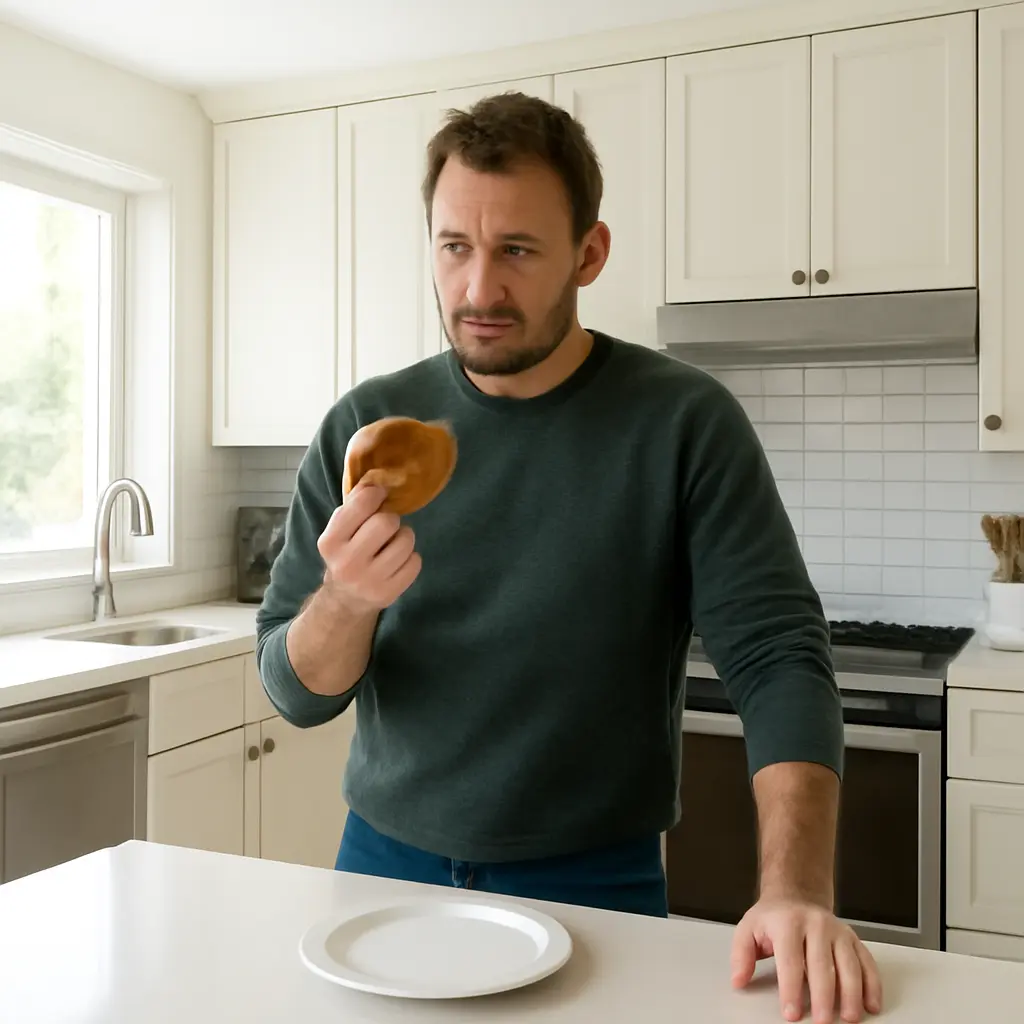
A day-old donut can still satisfy a sweet craving, but it usually does not deliver the same soft, fresh-baked texture. A donut is a fried or baked ring- or ball-shaped pastry, and its quality after a day depends on ingredients, packaging, and storage: moisture migrates, fats change, and exposed surfaces dry out. Food-science research on bread explains why starch retrogradation contributes to staling, while food-safety guidance makes clear that freshness and safety are separate questions. Understanding those changes helps explain which donuts are most affected, how storage alters the experience, and when it is sensible to throw one away.
Donut freshness and day-old texture
Freshness is the set of sensory qualities associated with a recently made food, including aroma, flavor, softness, and appearance. For donuts, “day-old” is an informal description rather than a standardized food-science or safety category: it may mean a pastry made the previous morning, or one stored for roughly 24 hours under unknown conditions.
Food scientists distinguish staling from spoilage. Staling is a quality change that can make a baked product firmer or less pleasant even when it has not become unsafe. Spoilage involves undesirable changes such as mold, off odors, or other signs of deterioration. The American Institute of Baking describes starch retrogradation—the rearrangement of starch molecules after baking—as a key contributor to bread firmness during storage. Donuts are not identical to bread, but the same basic starch-and-moisture processes help explain why many lose their fresh texture.
Softness, moisture, and starch
Softness depends partly on water remaining in the pastry and how that water is distributed. After cooking, moisture moves between the donut’s interior, crust, filling, and surrounding air. An uncovered donut can dry out; a sealed one may retain moisture but develop a damp or sticky surface. Meanwhile, starch molecules in the dough can reorganize over time, making the crumb feel firmer. These changes explain why a donut may taste less tender the next day even if its flavor remains recognizable.
Aroma, flavor, and toppings
Freshly made donuts release aromas from cooked dough, fats, sugar, and flavorings. As the pastry sits, volatile aromas can fade, while exposed fats may take on stale or rancid notes over longer periods. Glazes and toppings also change: sugar coatings can absorb moisture and turn tacky, crisp toppings can soften, and cream-based fillings require more careful temperature control. These effects vary by recipe and storage conditions, so “day-old” does not produce one uniform taste.
Donut type and day-old quality
The donut’s structure determines how noticeable aging will be. The main types include yeast-raised donuts, cake donuts, filled donuts, and donuts with glazes or crisp toppings. Their differences in aeration, moisture, fat, and filling help predict which qualities are most likely to change.
Yeast-raised donuts
Yeast-raised donuts are leavened with yeast, which creates a light, airy interior. That open structure can make them feel especially soft when fresh, but it can also make drying noticeable after storage. A plain or glazed yeast donut kept covered at room temperature may remain enjoyable the next day, though it is unlikely to be as pillowy as when fresh.
Cake donuts
Cake donuts use chemical leavening, such as baking powder, rather than relying on yeast fermentation. They are usually denser and more crumbly, so their day-old texture may feel less dramatically different from their fresh texture. However, they can still dry out, and a sugary coating may become sticky when exposed to humidity or trapped moisture.
Filled and topped donuts
Filled donuts combine pastry with a second component, such as custard, cream, or fruit filling. That combination makes storage conditions particularly important. The U.S. Department of Agriculture’s Food Safety and Inspection Service advises that perishable food should not remain at room temperature for more than two hours, or more than one hour when the temperature is above 90°F (32°C). A donut containing a perishable filling should be treated according to the filling’s storage needs, rather than assumed safe because it is a baked good.
This difference between donut types leads to a practical distinction: a pastry can be less fresh without being unsafe, while a perishable filling can create a safety concern even when the donut looks and smells normal.
Donut storage, staling, and food safety
Storage affects both eating quality and safety, but the best approach depends on the donut. For plain, glazed, or otherwise shelf-stable donuts intended for short-term eating, an airtight container at room temperature can limit moisture loss. Refrigeration may slow some forms of microbial growth, but it can also make baked goods firm more quickly; it is not automatically the best choice for texture. Donuts with cream, custard, or other perishable fillings should be refrigerated promptly, following the product’s label or the bakery’s instructions.
Room temperature, refrigeration, and freezing
Room-temperature storage is generally the simplest option for a plain donut that will be eaten soon, provided it is protected from air and contamination. Refrigeration is appropriate when food-safety needs require it, particularly for perishable fillings, though the pastry may become firmer. Freezing can preserve donuts for longer storage, but thawing may soften glazes or change the crumb. No storage method can restore a donut fully to its just-made condition.
How to judge a day-old donut
Use the ingredient list, storage history, and visible condition together. Discard a donut with mold, an unusual odor, or signs that its filling has been mishandled. Do not taste food to determine whether it is safe. When the storage history of a perishable-filled donut is uncertain, the safer choice is to discard it; appearance alone cannot confirm safety.
Can warming make a day-old donut better?
Brief warming can make some day-old donuts seem softer by warming the fats and increasing the perception of moisture. A few seconds in a microwave may improve a plain donut’s tenderness, while a low oven can warm several at once. Results vary: too much heat can make a donut tough, melt icing, or turn fillings dangerously hot. Warming improves the eating experience; it does not make spoiled food safe or reliably reverse staling.
A simple comparison can make the effect clear: taste one piece at room temperature and a second piece briefly warmed, noticing softness, aroma, and topping texture. This informal test illustrates sensory differences, not food safety, and should only be done with a donut known to have been stored appropriately.
Conclusion: the same donut, a different experience
A day-old donut can still be enjoyable, but it usually does not hit exactly the same way. Starch changes and moisture loss affect softness; aroma and toppings shift; and donut type and storage determine how noticeable those changes become. Plain yeast and cake donuts are mainly a freshness question when stored appropriately, while cream- or custard-filled varieties also require attention to food safety. Store donuts according to their ingredients, follow food-safety guidance, and judge quality separately from safety. For more detail, consult USDA food-handling guidance and food-science resources on baked-product staling.
Sources: American Institute of Baking, The Science of Staling, https://www.aibinternational.com/; U.S. Department of Agriculture, Food Safety and Inspection Service, Leftovers and Food Safety, https://www.fsis.usda.gov/food-safety/safe-food-handling-and-preparation/food-safety-basics/leftovers-and-food-safety; U.S. Department of Agriculture, Food Safety and Inspection Service, Danger Zone (40°F–140°F), https://www.fsis.usda.gov/food-safety/safe-food-handling-and-preparation/food-safety-basics/danger-zone-40f-140f.