
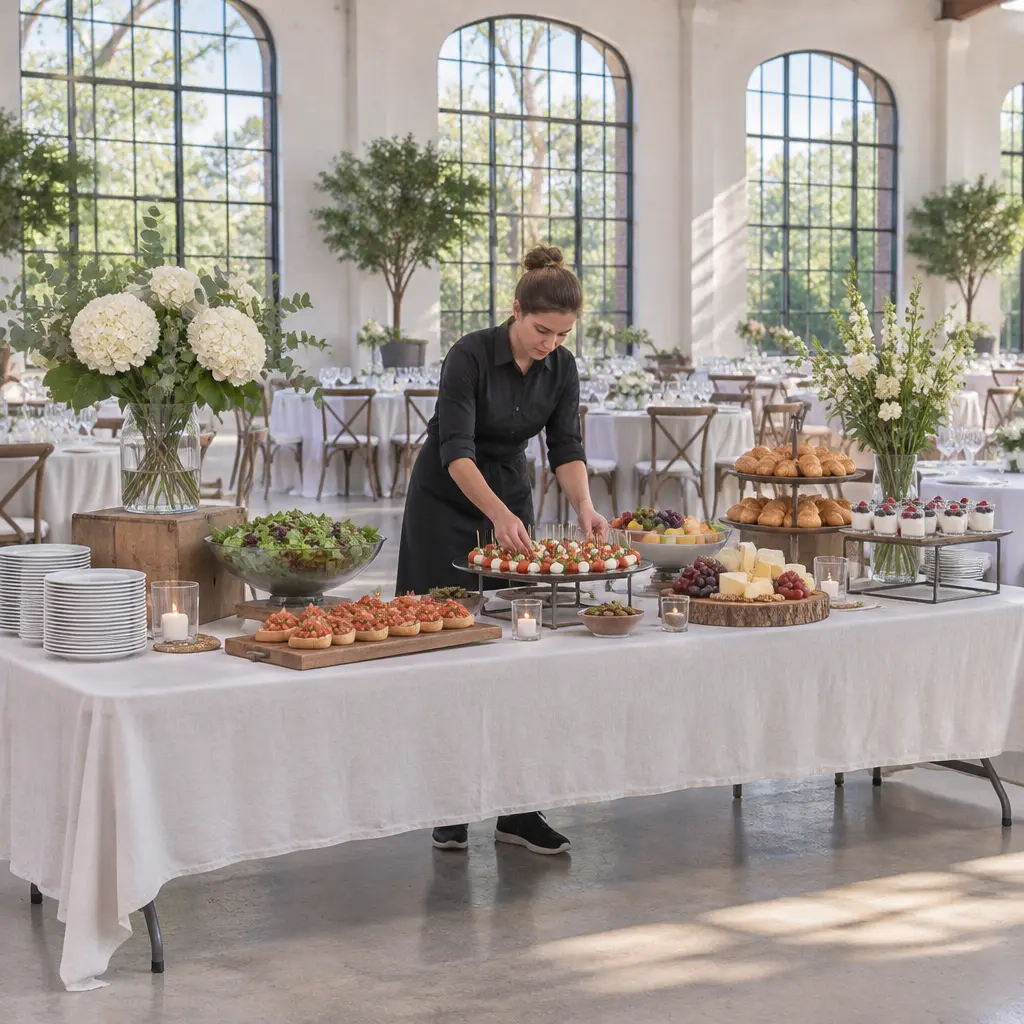
Catering assortment strategy is the deliberate design of a food and beverage selection to satisfy guest expectations, fit the event and budget, and make service practical. A strong approach balances familiar favorites—such as recognizable proteins, salads, and desserts—with a smaller number of distinctive options that add discovery without making the menu confusing or risky. This balance matters in a large, diverse market: the National Restaurant Association reported that U.S. restaurant and foodservice sales were projected to reach $1.5 trillion in 2025, while its research also identifies value, convenience, and changing consumer preferences as important industry pressures. The guidance below explains how to define an effective assortment, segment guests and events, introduce novelty responsibly, and use operational evidence to refine the menu.
Catering assortment strategy balances familiarity and discovery
There is no single universally accepted industry definition of “catering assortment strategy.” For practical planning, it means choosing and organizing menu items so that the overall selection meets guest needs while remaining financially and operationally feasible. The strategy covers more than the number of dishes: it includes the mix of flavors, dietary accommodations, service formats, portion sizes, price points, and opportunities to try something new.
The central design principle is to make the menu easy to navigate. Classic items reduce uncertainty and can provide broad appeal; novelty options create distinction and give interested guests something to explore. The right proportion depends on the occasion, audience, service style, and evidence from past events—not a fixed industry-wide ratio. Hyponyms, or closely related forms of the strategy, include menu engineering, event-specific menu planning, dietary-inclusive assortment planning, and seasonal menu development.
Classic favorites as the menu’s dependable core
Classic favorites are recognizable dishes or flavor profiles that guests can identify quickly, such as roast chicken, pasta, familiar salads, and fruit or chocolate desserts. Their role is to provide dependable choices, not to make every menu identical. Familiarity is especially useful at events with mixed ages, varied food preferences, limited ordering time, or buffet service, where guests must make decisions from what is presented.
A classic item still needs sound execution. A recognizable dish that arrives cold, is difficult to serve, or fails to meet stated dietary needs does not offer dependable value. Caterers should evaluate taste, temperature control, portion consistency, ingredient transparency, and suitability for the event’s service format alongside popularity.
Novelty options as controlled menu differentiation
Novelty options introduce an unfamiliar ingredient, regional influence, preparation, presentation, or flavor combination. Examples include a locally inspired grain salad, a globally seasoned vegetable dish, or a contemporary interpretation of a well-known dessert. Novelty should be legible rather than obscure: an appealing description and a connection to familiar ingredients can help guests understand what they are choosing.
The National Restaurant Association’s annual culinary forecasts track emerging food and beverage trends, providing a useful signal for menu development. A trend report is not proof that a particular dish will succeed at a particular event, however. Caterers should test unfamiliar dishes in small quantities, gather feedback, and confirm ingredient availability and production requirements before expanding them across a full menu.
Guest and event segmentation shapes catering assortment strategy
Segmentation means dividing an event’s needs into practical groups before selecting dishes. Useful factors include event purpose, audience, time of day, service duration, venue, budget, location, and dietary requirements. A working lunch for employees, a wedding reception, and a conference dinner can need different assortments even when the guest count is similar.
The U.S. Food and Drug Administration identifies nine major food allergens in the United States: milk, eggs, fish, crustacean shellfish, tree nuts, peanuts, wheat, soybeans, and sesame. This makes accurate ingredient information and thoughtful service planning essential. Caterers should ask clients for requirements early, document ingredients, prevent avoidable cross-contact, and communicate clearly about what a dish can and cannot accommodate.
Event format, audience, and service style
The service style changes what a balanced assortment looks like. A buffet can offer several choices but requires clear labels, suitable serving utensils, and replenishment plans. A plated meal needs fewer selections and advance confirmation. A reception built around passed bites benefits from compact portions that are easy to handle while standing, while a long meeting may require substantial food and convenient timing.
Audience information should guide, not stereotype, menu decisions. Ask about preferences and restrictions instead of assuming them from age, culture, or occasion. For uncertain groups, familiar anchor dishes paired with clearly described exploratory options can offer choice without requiring every guest to accept the same level of novelty.
Dietary inclusion and transparent information
Dietary-inclusive assortment planning means making suitable food available and identifiable for guests with allergies, religious requirements, ethical preferences, or other dietary needs. A token dish is not enough if it is poorly labeled, served with shared utensils that create cross-contact risk, or too limited to constitute a satisfying meal.
The FDA’s allergen guidance supports careful ingredient communication, while the U.S. Department of Agriculture’s Food Safety and Inspection Service provides guidance on preventing cross-contamination and handling food safely. Caterers should verify recipes with suppliers, keep ingredient records current, train staff on service procedures, and avoid promising an allergen-free meal unless the production process can support that claim.
Menu engineering connects catering assortment strategy with cost and execution
Menu engineering evaluates items through business and guest-performance measures, commonly including selling price, ingredient cost, contribution margin, popularity, and operational complexity. For catered events, the same logic can be applied to forecasted portions, purchasing, preparation time, transport, holding conditions, and likely waste. An item that looks attractive on paper may be a poor fit if it requires equipment the venue lacks or cannot hold safely.
The U.S. Environmental Protection Agency identifies food waste as a significant environmental and economic concern and encourages measurement as a first step toward reducing it. For caterers, tracking what is prepared, served, and left over helps distinguish a genuine guest favorite from an item that merely appears impressive in a proposal. These records can inform both assortment choices and production quantities.
Popularity, contribution, and production feasibility
Popularity indicates how often guests choose an item; contribution margin reflects the money remaining after relevant variable costs. Production feasibility considers whether the kitchen can deliver the dish consistently at the required scale. Evaluating all three prevents an overreliance on any one measure: a popular dish may have weak margins, while a high-margin dish may create service bottlenecks or receive little uptake.
A practical review can classify dishes as dependable high performers, promising experiments, costly or complex items, and candidates for revision. The categories should be based on the caterer’s own sales, event feedback, cost sheets, and waste records. Results from a plated corporate dinner may not transfer directly to a buffet or a wedding, so comparisons should account for event type and service format.
Food safety and operational resilience
Operational resilience is the ability to deliver the planned menu safely despite constraints such as delayed transport, limited kitchen equipment, ingredient shortages, or changes in guest count. The USDA Food Safety and Inspection Service emphasizes safe handling practices, including controlling time and temperature and preventing cross-contamination. Those requirements should be considered during menu selection, not left until the day of service.
Caterers can reduce risk by choosing dishes suited to the venue, confirming equipment and holding capacity, developing substitutions in advance, and maintaining clear instructions for staff. Novelty items deserve particular scrutiny when their ingredients are seasonal or their preparation depends on specialized equipment. A backup plan should preserve the menu’s balance, rather than replacing a distinctive dish with an unsuitable last-minute alternative.
Testing and measurement improve catering assortment strategy
A menu becomes more reliable when each event creates usable evidence. Caterers can review guest selections, portion depletion, leftovers, client comments, food costs, preparation hours, and service issues. The goal is to learn which combinations work for which circumstances—not simply to declare a dish universally popular or unsuccessful.
Pilot unfamiliar dishes before scaling
A pilot is a limited trial that tests a dish before it becomes a recurring menu option. It may be served as a small tasting, a limited buffet item, or a feature at a comparable event. Record guest response and operational performance, including whether the item holds well, can be replenished, and fits the planned budget.
A structured test separates recipe quality from presentation and context. If uptake is low, the issue may be the dish itself, its description, its placement, portion size, or the audience. Adjust one or two factors at a time where practical, then compare results with similar events.
Use dashboards and simple visual comparisons
A catering assortment dashboard can compare each dish’s selection rate, cost per portion, contribution, waste, and service difficulty. A simple chart can plot popularity against contribution margin, with operational complexity shown through color or a separate marker. This makes it easier to spot reliable staples, promising innovations, and items that need reformulation or replacement.
Interpret the data in context. Guest counts, menu placement, weather, event timing, and the availability of competing dishes can all affect selection. Where sample sizes are small, treat results as clues rather than conclusive proof, and combine numerical data with client and staff feedback.
Conclusion: build a dependable core and test novelty deliberately
Effective catering assortment strategy connects familiar favorites and novelty options with guest segmentation, dietary inclusion, menu engineering, safe operations, and continuous measurement. Classic dishes offer recognizable anchors; carefully tested innovations can make a menu more distinctive. Neither works well without clear information, realistic production plans, and evidence about cost, selection, and waste.
Caterers and event planners can begin by documenting guest needs, reviewing event constraints, and comparing menu items using consistent performance measures. Then pilot a small number of new dishes, collect feedback, and use the results to improve future menus. For further guidance, consult the National Restaurant Association’s industry research, FDA allergen resources, and USDA food-safety guidance.
Sources: National Restaurant Association, 2025 State of the Restaurant Industry Report, https://restaurant.org/research-and-media/research/research-reports/state-of-the-restaurant-industry/; National Restaurant Association, What’s Hot 2025 Culinary Forecast, https://restaurant.org/research-and-media/research/research-reports/whats-hot-2025-culinary-forecast/; U.S. Food and Drug Administration, Food Allergies, https://www.fda.gov/food/food-labeling-nutrition/food-allergies; U.S. Department of Agriculture, Food Safety and Inspection Service, Food Safety Basics, https://www.fsis.usda.gov/food-safety/safe-food-handling-and-preparation/food-safety-basics; U.S. Environmental Protection Agency, Preventing Wasted Food at Home, https://www.epa.gov/recycle/preventing-wasted-food-home.