
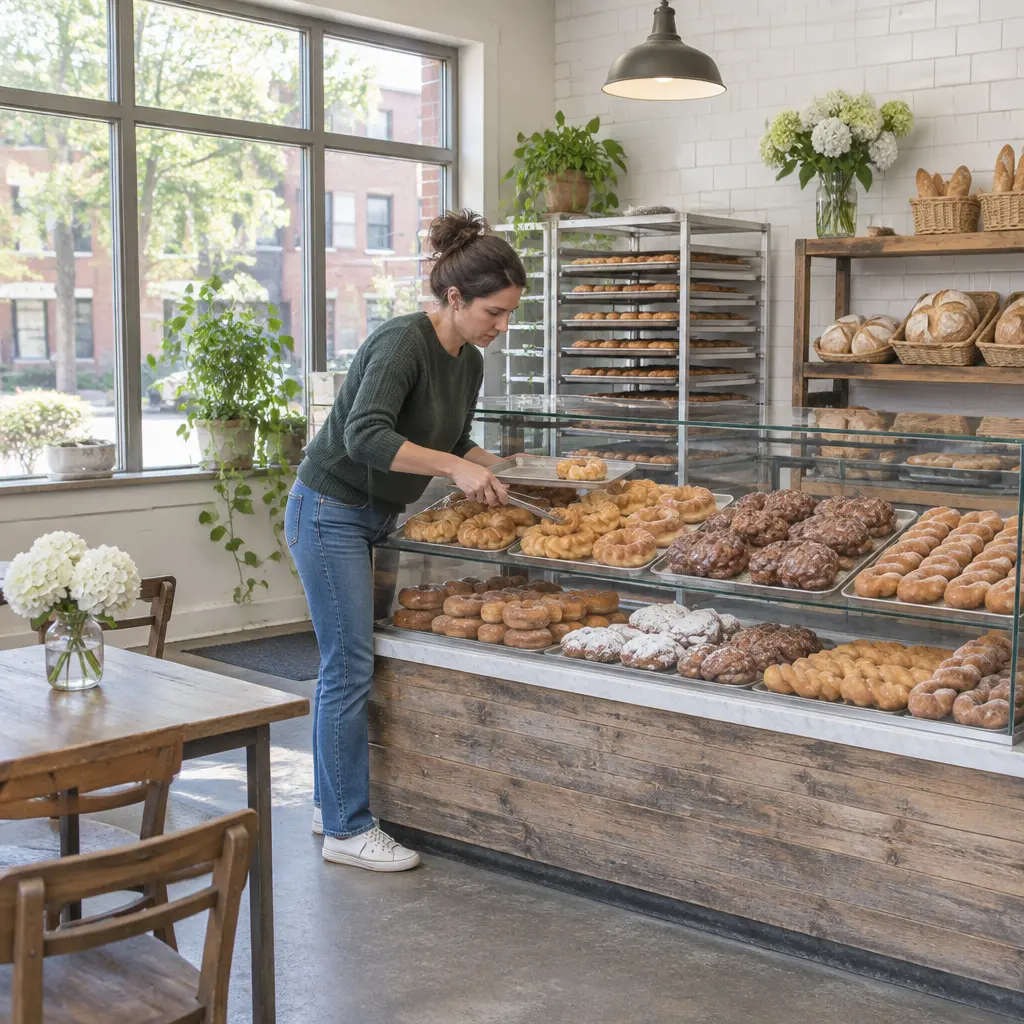
Crullers, fritters, and twists are three broad kinds of donuts distinguished less by their names than by how their dough is mixed, shaped, and fried. Crullers are often airy or ridged, fritters are irregular and filled or mixed with pieces of fruit or other ingredients, and twists are strands of dough spiraled together for a chewy, layered bite. Their richness varies with the recipe and frying method: a light choux-style cruller can feel less dense than a fruit-packed fritter, while a sugar-coated twist may taste rich without containing a filling. Understanding those differences helps explain what to expect at the bakery—and why local names and recipes do not always match.
How donut texture and richness are defined
There is no single authoritative taxonomy that assigns every donut to a universal category. In common baking usage, cruller, fritter, and twist describe recognizable forms or preparation styles, but recipes vary by region and bakery. The texture comparison therefore depends on ingredients and technique: dough type affects whether a donut is airy, cakey, or chewy; inclusions affect density; and frying and finishing affect crispness and perceived richness.
The U.S. Department of Agriculture’s FoodData Central provides nutrient data for foods and ingredients, but it does not establish one nutrition profile for each broad donut name. A donut’s calories, fat, and sugar depend on its size, recipe, frying, glaze, and toppings. The practical comparison is qualitative: describe the crumb and richness, then check the specific product’s nutrition information if precise figures matter.
Texture: crumb, chew, and crispness
Texture refers to how a donut feels as it is bitten and chewed. A raised dough donut can have a soft, yeast-leavened crumb; a cake donut is generally more compact; and a choux pastry can expand into a light interior. A fried exterior may be crisp immediately after cooking, but moisture migration and storage can soften it.
Richness: ingredients and eating experience
Richness describes perceived fullness, not a standardized measurement. Butter, egg yolks, dairy, frying oil, fillings, and coatings can all contribute. A donut may taste rich because it is dense or buttery, or because a sweet glaze or filling makes each bite intense. A light, hollow pastry can still be rich when generously filled or coated.
Crullers vary from airy to tender and cake-like
A cruller is generally a ridged or twisted fried pastry, but the name covers more than one dough tradition. Culinary references and bakery usage commonly distinguish French-style crullers made from choux pastry from denser, cake-style crullers. The shared visual clue is often a ridged, ring-like or elongated shape; the texture depends on which dough is used.
French-style crullers: airy choux pastry
A French-style cruller is typically piped from choux pastry, a cooked mixture of flour, water or milk, fat, and eggs. Steam helps expand the pastry during cooking, producing a light interior and a delicate shell. Its ridges provide extra surface for a thin glaze, while the open crumb makes it feel less dense than many cake donuts.
This style is often perceived as relatively light, though it is still fried and may carry a sweet glaze. Its richness rises with added butter or egg in the dough and with heavier toppings. The contrast between a crisp exterior and a tender, airy center is its signature appeal.
Cake-style crullers: tender and more substantial
Cake-style crullers use a batter or dough closer to cake-donut mixtures, which are commonly leavened with baking powder rather than yeast. They tend to have a more even, tender crumb and a sturdier bite than choux crullers. Depending on the recipe, they may be ridged, looped, or twisted.
Because the name varies across bakeries, a cruller label alone does not guarantee an airy pastry. Asking whether it is choux-based or cake-style is the clearest way to predict texture. That distinction also helps explain why one cruller may seem delicate while another feels filling.
Fritters are irregular, ingredient-rich donuts
A fritter is a portion of batter or dough fried with ingredients incorporated into it or served as part of its structure. For donuts, common examples include apple fritters and other fruit or spiced varieties. Rather than a smooth, uniform ring, fritters often have uneven edges and a varied interior, so each bite can contain a different balance of dough and filling.
Fruit fritters: soft pieces within a fried crumb
An apple fritter combines dough or batter with pieces of apple, often alongside cinnamon or other spices. The fruit adds moisture and flavor, while the dough fries into a more substantial, uneven crumb. In many bakery versions, a broad surface area develops crisp edges and holds glaze, creating a contrast between browned exterior, soft interior, and fruit.
Fruit does not automatically make a fritter nutritionally light. The total depends on portion size, dough, frying, and glaze. A large, heavily coated fritter can be more filling and taste richer than a small plain cruller, even when fruit is a prominent ingredient.
Other fritters: varied inclusions and uneven bites
Fritter recipes can include ingredients beyond fruit, and the term also applies to fried foods outside the donut category. In a donut-shop context, the defining idea is an irregular fried pastry with additions or a less uniform structure. The inclusions can make its crumb moist, dense, or lumpy, while exposed edges may fry crisp.
This mix of textures makes fritters especially variable. To compare two fritters fairly, consider the amount and type of inclusion, the thickness of the dough, and whether the finish is plain, glazed, or coated. Those factors often matter more than the category name.
Twists emphasize shape, chew, and surface coating
A twist is a donut shaped by spiraling or braiding strands of dough together before frying. The form is the defining feature, rather than one specific dough recipe. Twists may be made from yeast-raised dough or other enriched doughs, and they can be served plain, glazed, or rolled in sugar.
Yeast-raised twists: soft, stretchy interiors
Yeast-raised twists are made from dough that ferments and expands before frying. They commonly have a soft interior and a gently chewy bite, with layered or ridged surfaces where the dough strands overlap. The shape creates a varied thickness, so thinner sections may brown more quickly than the center.
A plain or lightly sugared twist can taste less intense than a filled fritter, but its richness depends on the dough and finish. Butter or other fat in the dough contributes tenderness, while a thick glaze or sugar coating adds sweetness and can make the overall bite feel more indulgent.
Coatings and regional names change the comparison
Twists are sold in many shapes and sizes, and regional bakeries may use different names for similar braided or spiraled pastries. A sugar-coated twist tends to have a dry, sparkling exterior; a glazed version has a smoother, sweeter shell. Neither finish alone tells you whether the interior is airy or dense, so the dough style remains important.
When choosing among twists, look at thickness and surface treatment. A slender twist usually offers more browned surface relative to its interior, while a thick one emphasizes soft dough and chew. These are useful expectations rather than fixed rules, since frying time and recipe differ.
Crullers, fritters, and twists compared at a glance
The following comparison summarizes typical tendencies, not strict standards. A bakery’s recipe can shift any category toward a lighter, denser, drier, or richer result.
- Cruller: Often ridged; may be airy and hollow when made with choux, or tender and more substantial when cake-style. Usually less ingredient-dense than a fruit fritter, though glaze can add sweetness.
- Fritter: Usually irregular and inclusion-rich. Often has a varied crumb, crisp edges, and a substantial feel; fruit, dough, frying, and glaze all shape its richness.
- Twist: Identified by spiraled or braided dough. Often soft and chewy inside, with texture influenced by thickness and coating.
For a visual comparison, a simple three-column chart could show typical interior structure, surface shape, and common sources of richness: choux air pockets for crullers, inclusions and uneven edges for fritters, and layered strands and coatings for twists. Such a chart should be labeled as a typical-style comparison, not a nutritional ranking.
Conclusion: choose by texture, then check the recipe
Crullers, fritters, and twists are best compared by their dough and structure. Crullers range from airy choux pastries to tender cake-style versions; fritters tend to be irregular and built around added ingredients; and twists showcase spiraled dough with a commonly soft, chewy bite. Richness is not determined by the name: ingredients, portion size, frying, and toppings can change the experience substantially.
For a lighter-feeling bite, try an unfilled, lightly glazed choux cruller; for fruit and varied texture, choose a fritter; and for a chewy, layered pastry, try a twist. If comparing nutrition, consult the bakery’s product details or a reliable food database entry that matches the actual recipe and serving size. That approach makes the category labels useful without treating them as rigid rules.
Sources: Encyclopaedia Britannica, “Cruller,” https://www.britannica.com/topic/cruller; King Arthur Baking, “Choux Pastry,” https://www.kingarthurbaking.com/recipes/choux-pastry-recipe; U.S. Department of Agriculture, FoodData Central, https://fdc.nal.usda.gov/